

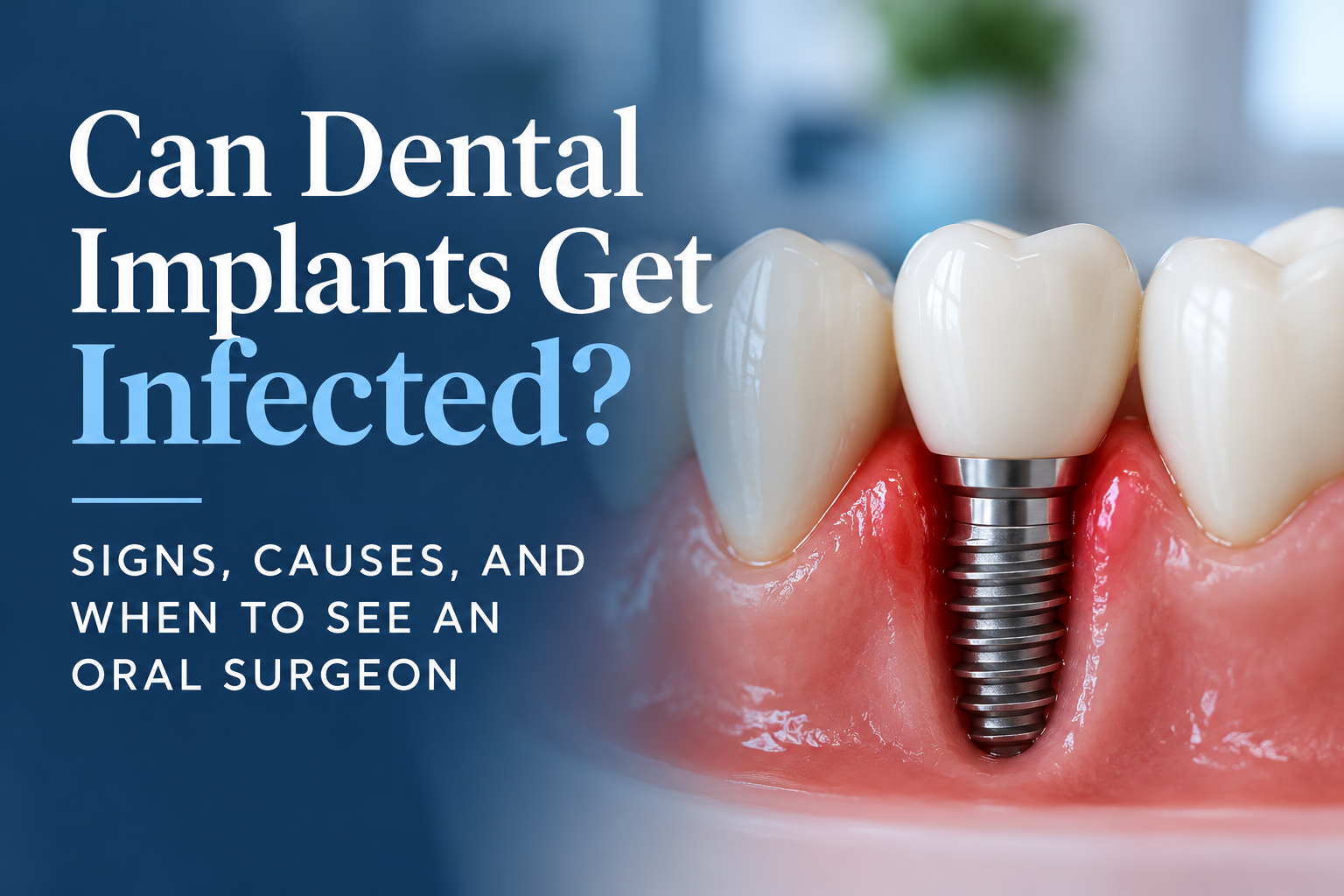
Can Dental Implants Get Infected? Signs, Causes, and When to See an Oral Surgeon
Dental implants can make eating, speaking, and smiling easier for people with missing teeth. However, even a well-functioning implant can develop problems involving the surrounding gums and jawbone.
Unlike natural teeth, artificial replacement teeth cannot develop cavities. The living tissues supporting an implant, however, can become inflamed or diseased. One condition, called peri-implantitis, can damage the bone responsible for keeping an implant secure.¹
Recognizing changes around an implant can help patients seek care before problems become more serious.
How Can an Infection Develop Around a Dental Implant?
When patients hear the phrase infected dental implant, they may picture bacteria damaging the artificial tooth itself. However, the concern is generally what happens in the gum and bone surrounding the implant, rather than damage to the replacement tooth.
Bacteria naturally live in the mouth. When plaque collects around an implant, the nearby tissues can become inflamed.
Dental professionals distinguish between two conditions.
Peri-implant mucositis involves inflammation of the gums around an implant, often accompanied by bleeding during examination, without the progressive supporting bone loss associated with peri-implantitis.
Peri-implantitis involves inflammation along with progressive loss of bone supporting the implant.¹
Identifying which condition is present helps determine the appropriate care.
How Can You Recognize Trouble Around a Dental Implant?
Changes around an implant do not always interfere with everyday activities. Someone might notice a small amount of blood while brushing near their replacement tooth, even though eating and chewing still feel completely normal.
Other possible warning signs include swollen or reddened gums and drainage from the surrounding tissue. These findings can occur with peri-implant inflammation, but they do not automatically establish a diagnosis of peri-implantitis.¹
A dental professional may examine the gums, measure the tissues around the implant, and review dental images to determine whether supporting bone has changed.
Can an Implant Have Problems Without Causing Pain?
Yes. An implant may continue functioning normally while inflammation develops around it.
Dental professionals diagnose peri-implant diseases using findings such as bleeding, tissue inflammation, changes in probing measurements, and bone loss. Pain is not required for a diagnosis.¹
This is why routine examinations matter, even when a patient’s implants feel completely normal.
Why Do Dental Implant Infections Happen?
Bacterial plaque plays an important role in inflammation around dental implants.¹ Regular professional monitoring and an individualized maintenance program are also recommended to help protect the surrounding tissues.²
However, risk differs between patients. A history of periodontal disease, the condition of the surrounding tissues, and the ability to clean around an implant may influence long-term care.
The European Federation of Periodontology recommends evaluating individual risk factors and incorporating preventive measures throughout implant treatment and maintenance.²
How Common Is Peri-Implantitis?
A 2022 systematic review and meta-analysis examining 57 studies estimated peri-implantitis prevalence at approximately 19.5% of patients and 12.5% of individual implants.³
These percentages should be interpreted carefully. The studies differed in their diagnostic definitions and methods, making it difficult to establish one figure applicable to everyone.
The findings show that peri-implantitis deserves attention, not that every patient faces the same likelihood of developing it.
Can an Infected Dental Implant Be Saved?
Sometimes. Developing peri-implantitis does not automatically mean an implant must be removed.
Treatment decisions depend on the condition of the surrounding tissues, the amount of supporting bone, and the extent of disease.
The European Federation of Periodontology recommends first attempting to treat peri-implantitis while preserving the implant and its restoration, provided an acceptable treatment outcome is achievable.²
Treatment generally begins with nonsurgical care and reassessment, with surgery considered when appropriate.²
Some implants may ultimately require removal, particularly when treatment cannot achieve an acceptable result.
How Does an Oral Surgeon Evaluate an Implant?
An evaluation may involve examining the surrounding gums, checking for inflammation or drainage, measuring the tissue around the implant, and reviewing radiographs.
Comparing current findings with earlier examinations can help identify changes in supporting bone.¹
The goal is to understand the cause and severity of the problem before recommending treatment.
Can Dental Implant Infections Be Prevented?
Although complications cannot always be prevented, patients can take steps to support implant health.
Regular cleaning, individualized professional maintenance, and attention to changes around the restoration are important parts of ongoing care. The European Federation of Periodontology emphasizes prevention before, during, and after implant treatment.²
Patients with full-arch restorations may require specialized cleaning techniques to reach beneath their replacement teeth.
When Should You Contact an Oral Surgeon?
Contact your dental professional if you notice persistent bleeding, swelling, drainage, discomfort, or unusual changes around an implant.
These symptoms do not necessarily indicate peri-implantitis, but they deserve evaluation.¹
Rapidly worsening facial swelling, fever with significant swelling, or difficulty swallowing or breathing requires urgent medical attention.
The Bottom Line
Dental implants replace missing teeth, but their long-term health depends on the tissues supporting them. Recognizing changes, maintaining good oral hygiene, and attending professional examinations can help patients address concerns before they progress.
At Jay Platt, DDS Oral Surgery and Dental Implant Center in Schererville, Indiana, we believe patients should understand both the benefits of dental implants and the importance of maintaining them.
If you have concerns about an existing implant or are considering dental implant treatment, scheduling a professional consultation can help you understand your options.
Read Next: How Long Do Dental Implants Last, Really?
Related Readings:
Am I Too Old for Dental Implants? What the Research Says
All You Need to Know: Full-Arch Dental Implants
Revolutionizing Smiles: The Evolution of Dental Implants in Modern Dentistry
References
- Berglundh T, Armitage G, Araujo MG, et al. Peri-implant diseases and conditions: consensus report of Workgroup 4 of the 2017 World Workshop on the Classification of Periodontal and Peri-Implant Diseases and Conditions. J Clin Periodontol. 2018;45(suppl 20). doi:10.1111/jcpe.12957. https://pubmed.ncbi.nlm.nih.gov/29926491/
- Herrera D, Berglundh T, Schwarz F, et al. Prevention and treatment of peri-implant diseases—the EFP S3 level clinical practice guideline. J Clin Periodontol. 2023;50(suppl 26):4-76. doi:10.1111/jcpe.13823. https://pubmed.ncbi.nlm.nih.gov/37271498/
- Diaz P, Gonzalo E, Gil Villagra LJ, Miegimolle B, Suarez MJ. What is the prevalence of peri-implantitis? A systematic review and meta-analysis. BMC Oral Health. 2022;22(1):449. doi:10.1186/s12903-022-02493-8. https://pubmed.ncbi.nlm.nih.gov/36261829/
Comments are closed.