
Artificial Joints, Antibiotics, and Dental Surgery: What’s the Deal?
Do I need antibiotics before dental work if I have an artificial joint?
Short answer: For most people with a hip or knee replacement, you do not need antibiotics before routine dental work.¹,²
Why people worry
A long time ago, doctors often gave antibiotics before dental care to try to protect new joints. That seemed smart because dental work can let tiny amounts of mouth bacteria into the bloodstream. But newer studies and official guidelines show this is usually not needed for most people.³,⁴
What the research shows
Big studies comparing many patients found no clear link between normal dental procedures and infections in artificial joints. They also did not show that giving antibiotics beforehand lowers the risk for most people. Because of this, major dental and orthopedic groups recommend not giving antibiotics to everyone with a joint replacement.¹,²
When antibiotics might still be used
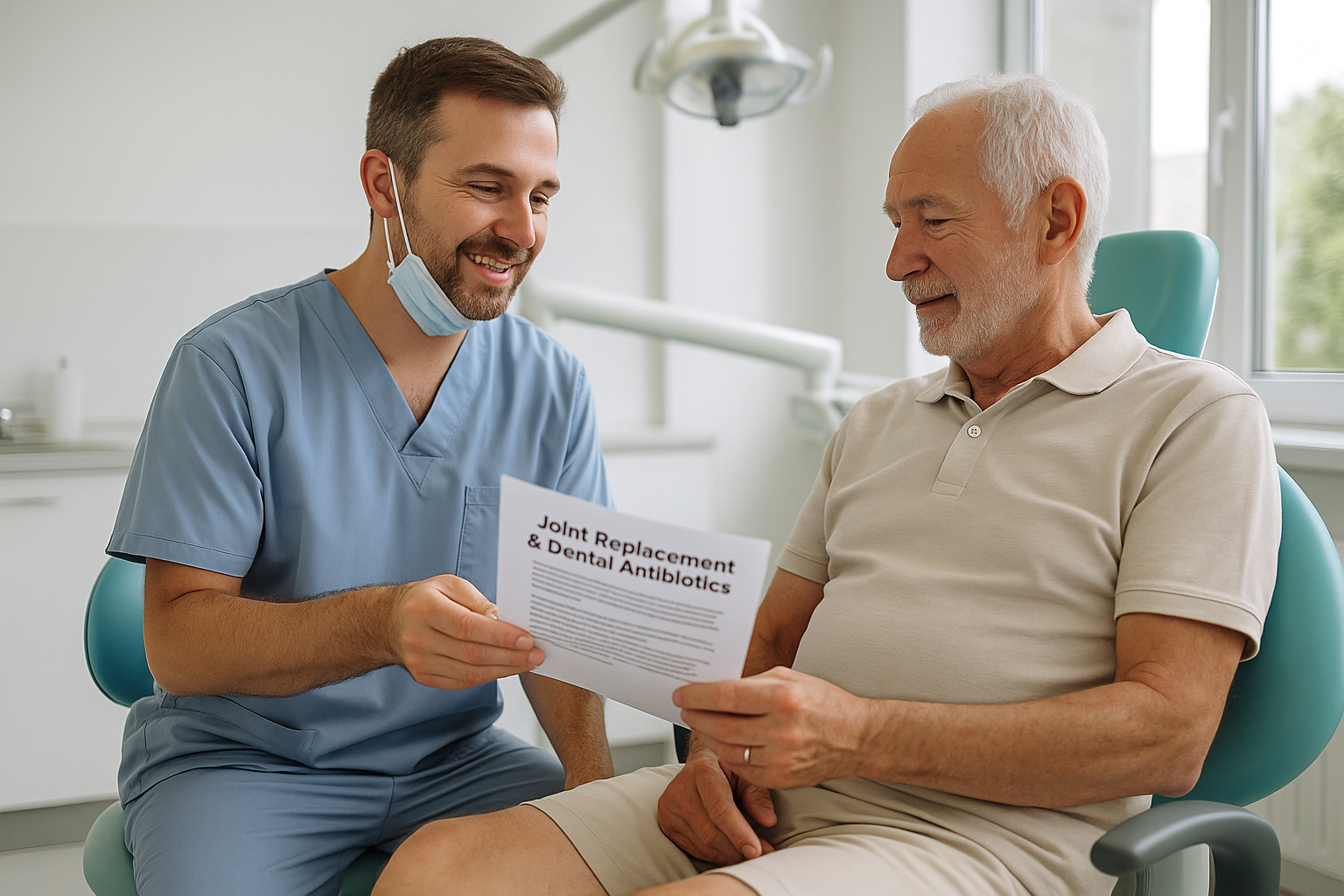
There are a few special cases where your dentist and surgeon might choose antibiotics: – If you had a previous infection in the artificial joint. – If your joint surgery was very recent and the wound is still healing. – If you have a weak immune system or other serious medical problems. If you plan on having an oral surgery procedure, such as a tooth extraction, dental implant surgery, or full mouth restoration, make sure Dr. Platt is aware of your joint replacement history so we can provide you the safest and best care possible.
In these situations, the dentist and orthopedic surgeon should talk and agree on a plan, and then write it in your chart.²
If you have questions about if antibiotics are the best choice for you prior to your procedure, give us a call! Our amazing team would be happy to answer any questions you might have! To schedule your free consultation or to set up your upcoming procedure, contact us today!
Quick takeaways for patients and staff
- Always tell your dental team you have a joint replacement and if you’ve had a prior joint infection.¹
- Most routine cleanings and simple dental procedures do not need antibiotics.¹,³
- If you or your surgeon want extra caution, the dentist and orthopedist can make and record a plan together.²
- Avoid unnecessary antibiotics — they can cause bad reactions and help germs become resistant to medicine.⁵
What’s Next?
Full Arch Dental Implants: The Future is Now
Osteonecrosis of the Jaws: Should You be Worried?
Related Readings
Am I Too Old for Dental Implants? What the Research Says
All You Need to Know: Dental Implants
All You Need to Know: Full-Arch Dental Implants
Comments are closed.