
The Power of Interprofessional Collaboration in Dental Implant and Full Arch Success
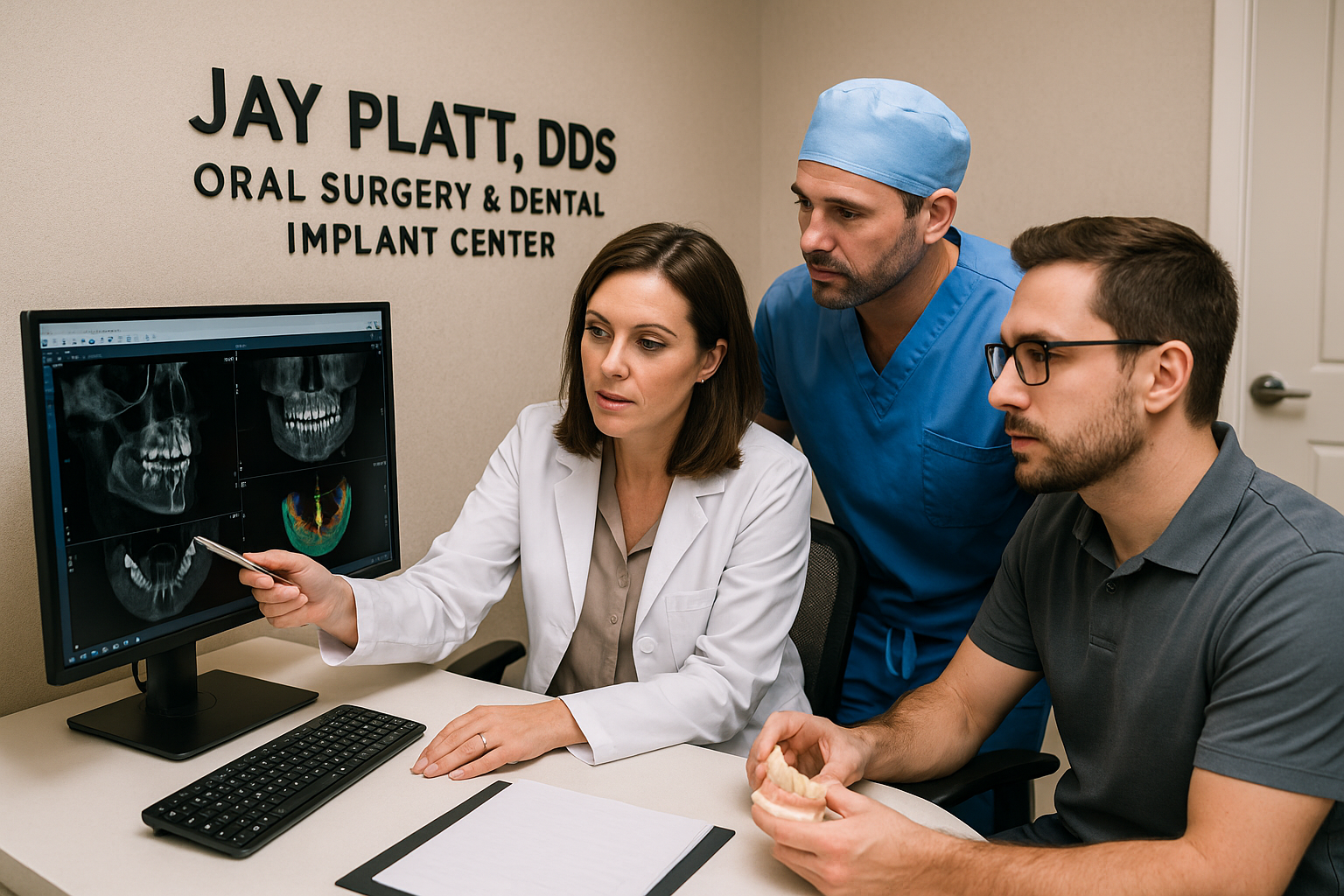
At Jay Platt, DDS, Oral Surgery & Dental Implant Center in Schererville, Indiana, we know that long‑term success in dental implant and full‑arch rehabilitation depends not only on surgical skill but on true interprofessional collaboration.¹ Seamless coordination among the restorative dentist, oral surgeon, and dental laboratory leads to more predictable outcomes, fewer complications, and a smoother patient experience.²
The restorative dentist begins by defining both esthetic and functional goals, creating a prosthetically driven plan that guides implant position, angulation, and spacing.³ This early blueprint ensures the final restoration meets both form and function.³
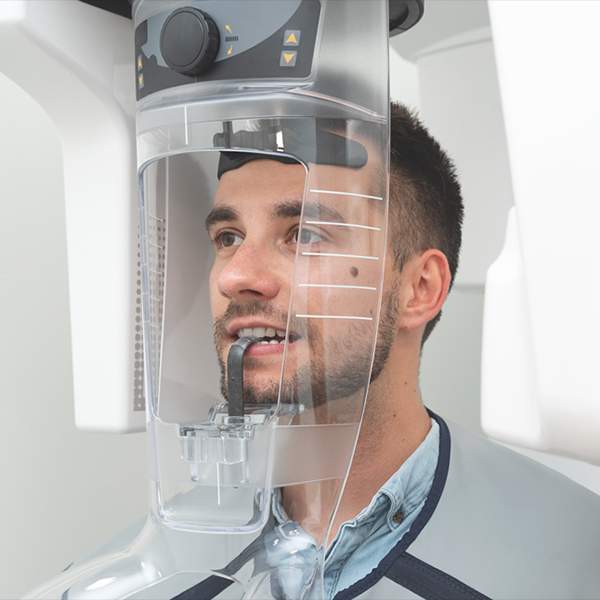
The oral surgeon then translates that restorative blueprint into a precise surgical plan—using CBCT imaging to maximize bone support, stability, and hygiene access—and performs the procedure with surgical accuracy.² This partnership minimizes surprises in the operatory and sets the stage for durable outcomes.²
Equally essential is involving the dental laboratory from the very start. Early lab input enables fabrication of accurate surgical guides and temporaries that match both the surgeon’s anatomy and the restorative vision, reducing remakes and expediting final delivery.⁴
A 2024 review in the British Dental Journal confirms that prosthetically guided surgical planning—driven by interdisciplinary communication—significantly improves placement accuracy and reduces misfits compared with freehand approaches.⁴ Likewise, a 2021 meta‑analysis in Nature Reviews in Dentistry found that computer‑assisted implant protocols achieve lower angular deviation and higher positional accuracy than unguided surgery.⁵
When implants are placed within this team‑based framework, five‑year survival rates routinely exceed 90%, underscoring the clinical value of collaboration.⁶ In one retrospective cohort of anterior mandibular implants with a mean follow‑up of 5.5 years, survival was 90.9%, with failures often linked more to restorative challenges than to surgical technique.⁷
Case series also demonstrate how digital, team‑driven workflows—where restorative dentists, surgeons, and labs collaborate on virtual setups and pre‑fabricated guides—produce excellent esthetic symmetry, occlusal function, and patient satisfaction in full‑arch cases.⁸ Beyond clinical technique, interprofessional education programs measurably improve communication, clarify roles, and enhance patient care in complex maxillofacial cases.⁹
At our Center, we embed this collaborative ethos in every case: shared planning sessions with referring clinicians and lab partners, digitally guided surgery, and transparent provisional and final restorations. The result for patients is shorter treatment times, fewer complications, and beautiful, functional smiles that last. Referring clinicians gain confidence knowing their restorative vision is honored. Lab partners thrive in an environment of clear communication and predictable specifications.
Ultimately, successful implant and full‑arch therapy is never the work of a single provider—it is the product of a well‑orchestrated team.¹⁻⁹ At Jay Platt, DDS, we champion collaboration as the cornerstone of world‑class oral surgery and implant care.
📞 Ready to Collaborate?
General dentists and prosthodontists: let’s plan together. Contact Jay Platt, DDS, Oral Surgery & Dental Implant Center in Schererville today to schedule your case planning session—and deliver the best possible implant outcomes for your patients.
References
- Nulty A. A literature review on prosthetically designed guided implant placement and the factors influencing dental implant success. Br Dent J.2024;236(3):169–180.
- Buser D, Sennerby L, De Bruyn H. Modern implant dentistry based on osseointegration: 50 years of progress, current trends and open questions. Periodontol 2000.2017;73(1):7–21.
- Morton D, Gallucci G, Lin WS, et al. Group 2 ITI Consensus Report: Prosthodontics and implant dentistry. Clin Oral Implants Res.2018;29(suppl 16):215–223.
- Nulty A. A literature review on prosthetically designed guided implant placement: interdisciplinary factors influencing success. Br Dent J.2024;236(3):169–180.
- Vercruyssen M, Jacobs R, van Assche N, van Steenberghe D. The use of computer‑assisted implant planning and placement. Nat Rev Dent.2021;5:112–119.
- Jokstad A, Carr AB. What is the effect on outcomes of time‑to‑loading of a fixed dental prosthesis placed on implant(s)? Int J Oral Maxillofac Implants.2014;29(suppl):239–262.
- Pedrinaci I, González‑González I, Montero J, et al. Implant survival in the anterior mandible: a retrospective cohort study with 5.5 years mean follow‑up. Clin Oral Investig.2023;27:1235–1243.
- Kaushik V. A digital workflow to improve single‑unit anterior implant success: case series. Oral Health J.2020;110(6):32–38.
- Palatta AM, Cook BJ, Anderson EL. The impact of interprofessional education on team behavior and patient care in dental rehabilitation settings. Clin Med J.2018;4(2):56–62.
Comments are closed.