
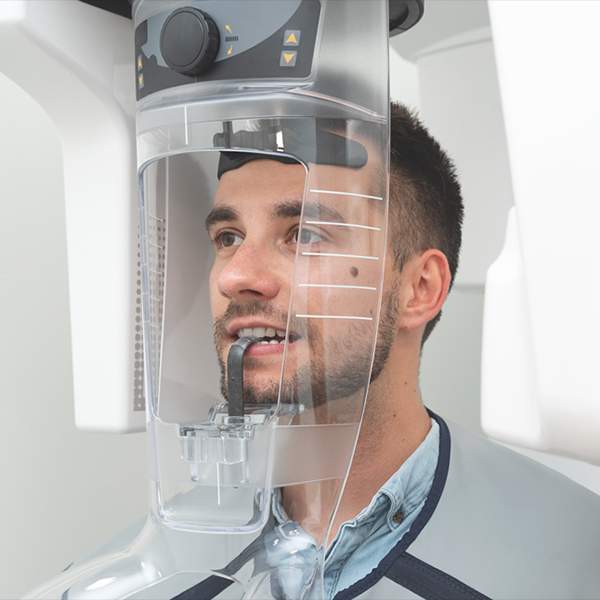
A Feast for the Family… But What About Your Teeth?
A Simple and Easy Thanksgiving Smile Guide
Thanksgiving brings family, comfort food, and hours of delicious celebrating. But while your taste buds may enjoy the holiday lineup, your teeth may not feel quite as festive. Many Thanksgiving staples contain sugars, starches, or acidic ingredients that stick to enamel and fuel cavity-causing bacteria.¹⁻² And if you’ve recently had oral surgery or dental implant placement, certain textures—including hard or crunchy foods—may stress healing tissues.³
The good news? You don’t need to skip your favorite dishes. With a little awareness, you can enjoy the day and protect your smile.
Why Thanksgiving Can Be Tough on Your Teeth
Unlike a typical one-hour dinner, Thanksgiving often turns into an all-day eating event—snacking, grazing, second helpings, and dessert later in the evening. Frequent sugar and carbohydrate exposure increases the risk of tooth decay because oral bacteria convert sugars and starches into acids that attack enamel.¹,⁴
Foods like stuffing, rolls, and mashed potatoes break down rapidly into sugars, and cranberry sauce and acidic beverages can soften enamel, raising erosion risk.² If you’ve recently undergone implant placement, bone grafting, or an extraction, biting into crunchy or chewy foods can disrupt healing or cause discomfort.³
Understanding how different foods affect your teeth can help you make smart—yet still satisfying—choices.
Thanksgiving Foods You Should Be Careful With
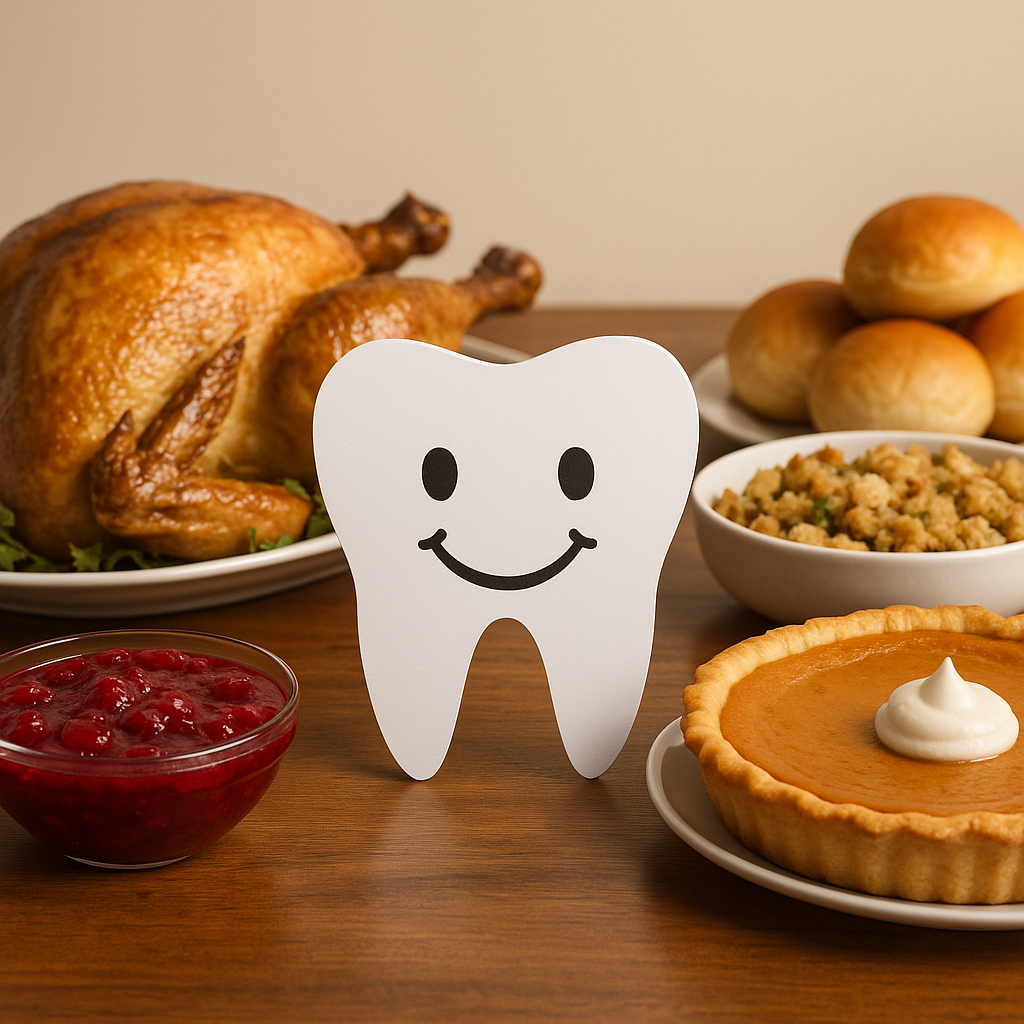
Holiday favorites can be enjoyed, but some require caution:
Sticky desserts—including caramel-based pies, pecan pie, or chewy bars—adhere to tooth surfaces, increasing how long sugar remains in the mouth and raising cavity risk.⁵
Pumpkin pie and sweet toppings may be softer but still contain significant sugar.
Cranberry sauce and acidic sides combine sugar and acid—two leading contributors to enamel erosion.²
Starches like bread, stuffing, and potatoes quickly convert into fermentable carbohydrates, which oral bacteria metabolize into enamel-degrading acids.¹
Sodas, punches, and sweet cocktails repeatedly expose teeth to acids—especially when sipped slowly over several hours.²
Hard foods such as nuts or unpopped popcorn kernels may chip teeth or compromise recent dental work, including implants.³
Thanksgiving Foods That Help Keep Your Smile Healthy
Thankfully, there are plenty of tooth-friendly options on the Thanksgiving table:
Turkey provides high-quality protein, which supports tissue repair and wound healing after oral surgery.⁶
Vegetables—carrots, celery, broccoli, and green beans—stimulate saliva, offer fiber, and help naturally cleanse the mouth.
Cheese and dairy dishes support a healthy oral pH and supply calcium—essential for strong teeth and bones.⁷
Water is one of the most protective choices—it rinses sugars, food particles, and acids, while supporting saliva flow, which naturally defends against decay.⁸
Simple Tips for Protecting Your Teeth This Thanksgiving
You don’t need to avoid holiday favorites—just use a few simple habits:
- Eat during mealtimes rather than grazing to reduce constant acid exposure.¹
- Pair sweets with protein or vegetables to limit acidity.
- Drink plenty of water throughout the day to keep your mouth clean.⁸
- Brush and floss before bed—especially after a big meal.
If you’ve recently undergone oral surgery or dental implant placement, follow the dietary guidelines provided by Dr. Platt—healing areas need time, protection, and proper nutrition.³,⁶
Enjoy the Holiday and Keep Your Smile Bright
Thanksgiving should be joyful—not stressful. With a little planning, you can savor every bite while protecting your teeth, oral health, and dental work.
If you have questions about eating after oral surgery or want more information about dental implants, the team at Jay Platt Oral Surgery and Dental Implant Center in Schererville, Indiana is here to help.
Wishing you a warm, grateful, and tooth-healthy Thanksgiving!
References
- Moynihan PJ, Kelly SA. Effect on caries of restricting sugars intake: systematic review. J Dent Res. 2014;93(1):8-18.
- Lussi A, Carvalho TS. Erosive tooth wear: a multifactorial condition of growing concern. Dent Clin North Am.2014;58(3):505-528.
- Esposito M, Grusovin MG, Worthington HV. Interventions for replacing missing teeth: different types of implants and prostheses. Cochrane Database Syst Rev. 2014;(7).
- Zero DT. Sugars—the arch criminal? J Am Dent Assoc. 2004;135(10):1380-1385.
- Zero DT. Behavioral and dietary factors associated with dental caries. J Dent Res. 2012;91(3):284-289.
- Hughes T, et al. Nutritional support for wound healing following oral and maxillofacial surgery. J Oral Maxillofac Surg. 2012;70(7):e469-e475.
- Gupta P, et al. Role of cheese in dental caries prevention: a systematic review. J Oral Biol Craniofac Res.2019;9(3):193-197.
- Humphrey SP, Williamson RT. A review of saliva: normal composition, flow, and function. J Prosthet Dent.2001;85(2):162-169.
Comments are closed.